Skip to content
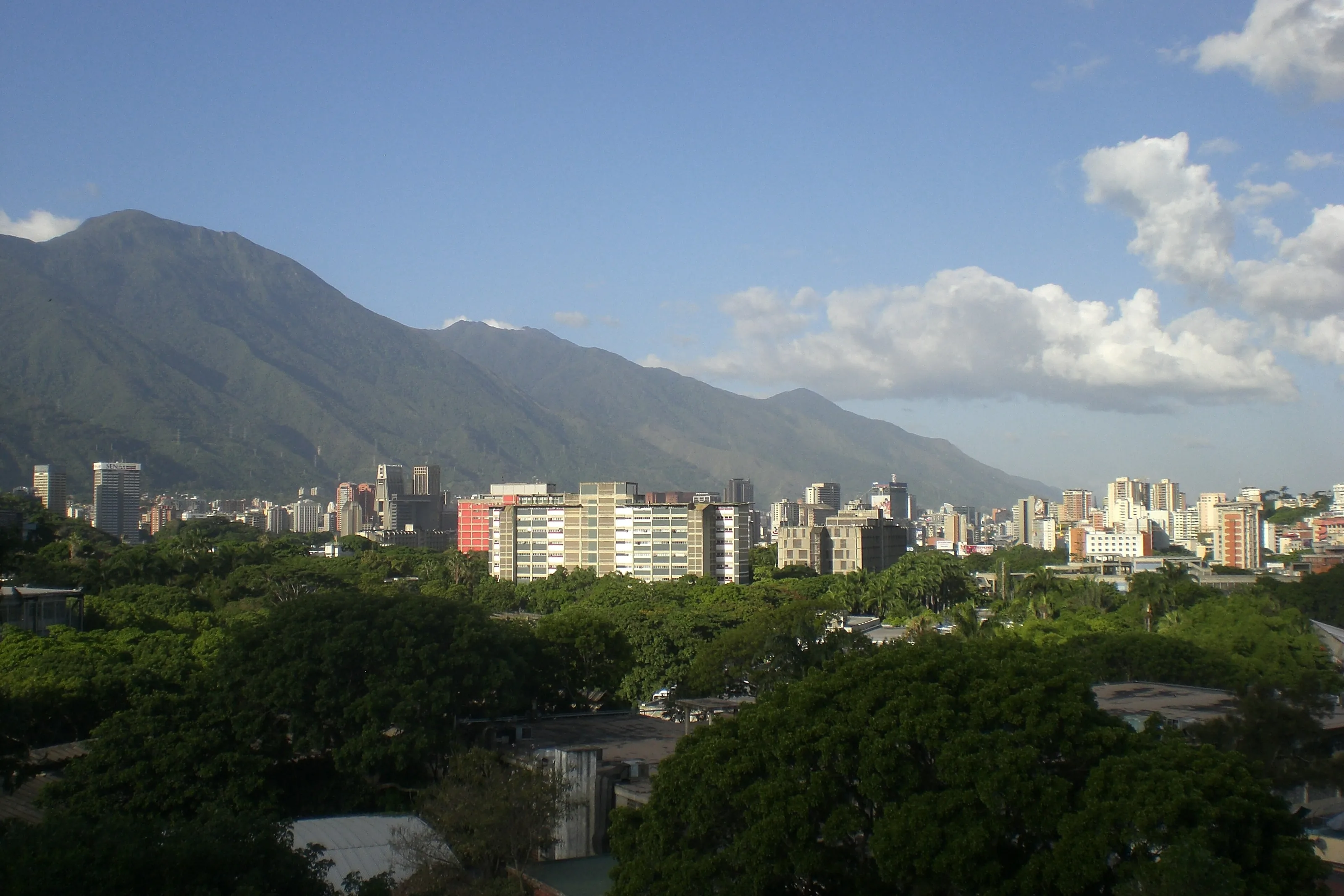
Caracas at night with El Ávila in the background

Investors

Investing in Venezuela with reliable information and local support

We present purchase and investment opportunities with organised, sourced information, and support you with local professionals through the evaluation, negotiation and closing of each transaction.

Why Venezuela?

How we work

Our process follows five simple steps, with full transparency about what we do and what we need from you.

  1. Request the opportunity summary

    Use the form to choose the sectors that interest you. We send you a summary of anonymous profiles: sector, region, transaction type, size range and the key features of each asset.

  2. Sign a confidentiality agreement

    If an opportunity interests you, we sign a confidentiality agreement (NDA) that protects both you and the owner, so that we can disclose the asset's identity to you.

  3. Information memorandum and meeting with the owner

    We provide a complete document, with the source of every figure and any information gaps clearly flagged. We then arrange a meeting with the asset's owner to answer your questions and get due diligence under way.

  4. Evaluate with local support

    If you decide to proceed, we open the data room and introduce you to lawyers, auditors, valuers and technical experts who know the local market, so that due diligence can begin. You can work with your own advisers or with the ones we recommend, and we coordinate the work.

  5. Offer, negotiation and closing

    If you are interested in the asset, you submit an offer setting out price, terms and timing. We support you through the negotiation until the contract is signed.

Why Venezuela?

For some investors, Venezuela is a risk they are not prepared to take. For others, it is a rare opportunity. We believe in the country's immense potential, and our investment thesis reflects that.

The starting point

Between 2013 and 2021, Venezuela's gross domestic product contracted by around 75%, according to ECLAC and the IMF. The IMF describes it as the largest economic collapse in a country not at war in almost half a century. The sectors most dependent on credit and investment were hit hardest. Between 2013 and 2019, construction fell 96% and manufacturing 83%.

The economy has been growing since 2022. ECLAC estimates growth of 8.9% in 2025 and projects 6.5% for both 2026 and 2027, the highest rate in South America, against a regional average of 2.2%. Oil output reached 1.15 million barrels a day in September 2026, according to OPEC secondary sources. That is more than three times the June 2020 low, but still less than half the 2013 average.

There is still ample room for recovery. Private manufacturing used 51.7% of its installed capacity in the second quarter of 2026, according to Conindustria. Bank credit stands at 3.6% of GDP, against 22.7% in 2014. These are the hallmarks of an economy expanding from a low base, with idle capacity and little financial intermediation.

What changed in 2026

  1. Economic and institutional transformation

    Venezuela begins a process of economic and institutional transformation that paves the way for the year's legal reforms.

  2. Hydrocarbons Law reform

    Private companies can now carry out primary activities at their own risk, market their own production and agree to arbitration to settle disputes.

  3. Relations with the United States

    The two countries restore diplomatic and consular relations, and the US embassy in Caracas resumes operations.

  4. OFAC General Licenses

    Thirteen new General Licenses, from 46 to 58, authorise transactions in hydrocarbons, electricity, mining and financial services, subject to conditions.

  5. IMF and World Bank

    Both institutions resume relations with Venezuela. The IMF restores its surveillance and the country's access to around US$4.9 billion in SDRs.

  6. Organic Law on Mines

    Opens the sector to private companies, Venezuelan and foreign, through concessions of up to 30 years that can be extended.

Assets priced below what it costs to build them

Building a square metre today costs between US$1,000 and US$1,500 for housing and between US$1,500 and US$2,500 for commercial use. Much of the existing stock trades below those figures. In Caracas, a mid-range office is offered at US$200 to 500 per m² and an industrial warehouse at US$100 to 300, several times less than in Bogotá, Santo Domingo or Panama City.

Prices have started to move. The median closing price of apartments in Caracas rose from US$800 per m² between January and April 2026 to US$1,000 between June and September, an increase of 25%. As long as existing property sells for less than it costs to build, new supply will struggle to compete with it, and that supports the value of what is already built.

The property market runs in foreign currency. According to Fedecámaras, 90% of transactions in the sector were settled in foreign currency in the first quarter of 2026, against 39% across the economy as a whole. With bolívar inflation of 475% in 2025, according to the BCV, this makes entry simpler for investors, who buy and operate in the same currency in which they measure their returns.

Caracas compared with other regional capitals
  • Caracas
  • Other capitals

Premium office

Caracas
Bogotá
Santo Domingo
Panama City

Mid-range office

Caracas
Bogotá
Santo Domingo
Panama City

Prime retail

Caracas
Bogotá
Santo Domingo
Panama City

Industrial

Caracas
Bogotá
Santo Domingo
No data
Panama City
01,0002,0003,0004,000

Each bar runs from the lowest to the highest price in the range. Single figures are shown as a dot. Sources: CBRE MarketView, El País and local market analysis. Caracas ranges reflect recent transactions and active listings.

Reference prices per m², in US dollars
Asset typeCaracasBogotáSanto DomingoPanama City
Premium office500 - 1,5001,800 - 2,5002,000 - 3,0004,300
Mid-range office200 - 5001,200 - 1,8001,500 - 2,0002,000 - 3,000
Prime retail500 - 1,2001,500 - 2,5002,000+3,000+
Industrial100 - 300800 - 1,200No data1,000 - 1,500
Sources: CBRE MarketView, El País and local market analysis. Caracas ranges reflect recent transactions and active listings.

Lessons from other markets

Peru, Argentina and Colombia emerged from deep crises through openings that attracted capital. None is identical to Venezuela, but their paths are instructive. Peru ended 1990 with inflation of 7,650% and an economy 25% smaller than in 1987. After stabilising and opening sectors previously reserved for the state to private capital, it grew by around 7% a year between 1993 and 1997. Argentina's economy shrank 10.9% in 2002 and then grew between 8.5% and 9.2% a year from 2003 to 2006, with construction the most dynamic sector. In Colombia, better security and stable rules took foreign direct investment from US$1.72 billion in 2003 to US$16.15 billion in 2014.

Myanmar, after its 2011 opening, shows the opposite case. When an opening is reversed, asset values fall back with it. In all of these markets, the timing of entry and the structure of the investment mattered as much as the asset chosen.

“An investor can't just fly to Caracas and start knocking on doors.”

Robert Koenigsberger, Founder of Gramercy Funds, January 2026

Risks you should know about

We set them out openly, because informed investors make better decisions. For each one, we explain what it involves and how it is managed in practice today.

  • Political risk

    The risk

    Venezuela has a history of expropriations and of international arbitration awards that remain unpaid. The transformation process that began in 2026 is still under way.

    How it is managed

    Several bilateral investment treaties remain in force and the 2026 Hydrocarbons Law allows international arbitration. Structuring the investment through a jurisdiction with a treaty in force reduces exposure.

  • Corruption

    The risk

    Venezuela ranks near the bottom of Transparency International's Corruption Perceptions Index (178th of 180 in the 2024 edition). In practice, some procedures can take longer and cost more than expected.

    How it is managed

    Transactions are protected through escrow accounts abroad, private arbitration and investment vehicles domiciled outside the country, all standard tools in emerging markets.

  • Infrastructure

    The risk

    The power grid operates under constraints and several regions experience outages. Any asset that relies on the public grid has to absorb that cost.

    How it is managed

    On-site gas or solar generation is standard practice in industry and commerce, and its cost is assessed as part of each asset's due diligence.

  • Security

    The risk

    According to the Venezuelan Violence Observatory (OVV), the violent death rate fell from between 79 and 90 per 100,000 inhabitants in 2013-2015 to 26.8 in 2023, a drop of more than 65%. Even so, several cities remain above the regional average.

    How it is managed

    The downward trend has held since 2016. The main commercial corridors now operate with standard corporate security protocols.

  • Sanctions (OFAC)

    The risk

    Sanctions administered by the US Office of Foreign Assets Control (OFAC) affect any transaction with a US nexus. Each one requires its own compliance review.

    How it is managed

    The regime has been eased sector by sector through General Licenses. In 2026 alone OFAC issued thirteen new ones, from GL 46 to GL 58. With a structure reviewed by specialist lawyers, the risk can be managed on a transaction-by-transaction basis.

These risks can be managed, but not eliminated. Part of our job is to make sure you see them clearly before you decide.

Investing in Venezuela from abroad

As a general rule, Venezuela does not require foreign investors to have a local partner or obtain prior permits. Where you start depends on your profile, and above all on whether you have a US nexus. We guide you through each point and connect you with the specialists who handle the formalities.

With a US nexus

Sanctions (OFAC)

OFAC compliance is mandatory. General Licenses apply automatically, without an application, but you must confirm that the transaction meets their conditions before going ahead.

Permits and registration

No prior permit from the Venezuelan government is needed, but the investment must be entered in the foreign investment register within the legal deadline.

Local partner

A Venezuelan partner is not required. In strategic sectors such as oil and mining, special conditions may apply.

Investment vehicle

It can be domiciled outside Venezuela.

Banking and timing

Correspondent banking can cause operational delays.
Investors from the rest of the world

Sanctions (OFAC)

For most investors without a US nexus, such as European, Asian or Arab funds, there are no restrictions equivalent to OFAC's. You should still check the rules in your own jurisdiction.

Permits and registration

No prior permit is needed, but the investment must be entered in the foreign investment register within the legal deadline.

Local partner

A Venezuelan partner is not required. In strategic sectors, special conditions may apply.

Investment vehicle

It can be domiciled outside Venezuela.

Banking and timing

Usually more straightforward than for investors with a US nexus.

Four questions every transaction must address

  1. Investment vehicle

    It is usually set up outside Venezuela, for legal certainty, access to banking and tax efficiency. Operating from within the country is also possible. We help you choose the option that suits you best.

  2. Legal framework

    Venezuela has bilateral investment treaties in force with several countries, and the 2026 Hydrocarbons Law allows international arbitration, a fundamental change for investor protection.

  3. Sanctions (OFAC)

    If you have a US nexus

    If you are a US citizen or resident, or own a US company, every transaction requires an OFAC compliance review. We work with specialist lawyers on this.

  4. Capital repatriation

    The widespread use of the US dollar simplifies transactions. The conditions for repatriating capital depend on the structure chosen and on your jurisdiction.

The regulatory framework, and US sanctions in particular, changes frequently. This information is for guidance only and is not a substitute for legal advice.

A network of local professionals

If you already have trusted advisers, we work with them. If not, we can introduce you to professionals with experience in large transactions.

  • Transaction lawyers

    Legal structure, contracts and representations

  • Compliance lawyers

    Sanctions (OFAC) and structure by jurisdiction

  • Auditors and accountants

    Financial review and accounting due diligence

  • Certified valuers

    Formal asset valuations

  • Technical and environmental experts

    Site inspections and environmental assessments

  • Financial consultants

    Business plans, market and feasibility studies

We recommend the professionals, help you engage them and coordinate their work throughout the transaction. Each one works directly for the party that engages them.

Already know what you are looking for?

Request an anonymous summary of opportunities in the sectors that interest you, or write to us if you would rather talk first.

Contact T3